From a Shy Young Star to the Voice of Millions: 33 Years of Vijayism
By Samaran, Founding Editor, TheIndianCinema.com
Thirty-three years ago, in the summer of 1992, a lanky nineteen-year-old with nervous eyes and a hesitant smile stepped onto the screen in a modest family drama called Naalaiya Theerpu. Few could have predicted that this shy boy, introduced merely as “Ilayathalapathy Vijay” in the titles, would go on to become the defining phenomenon of Tamil cinema in the 21st century. Today, on the completion of 33 glorious years, the term “Vijayism” is no longer just fandom—it is a cultural movement, a socio-political force, and quite possibly the last surviving example of pure, unadulterated star worship in Indian cinema.
Joseph Vijay Chandrasekhar never inherited stardom; he constructed it, brick by patient brick. The son of veteran filmmaker S.A. Chandrasekaran, he could have coasted on nepotism, yet chose the harder path—starting as the awkward hero in small-budget romances, absorbing ridicule for his dancing, his dialogue delivery, even his looks, and then returning, year after year, sharper, hungrier, more aware of what the audience craved. From the boy-next-door of *Poove Unakkaga* (1996) to the raging working-class messiah of *Kaththi* (2014), from the reluctant dancer who once hid behind trees to the man who now detonates stadium-sized whistle storms with a single shoulder shrug—Vijay’s evolution is perhaps the most meticulously engineered career graph in modern Indian cinema.
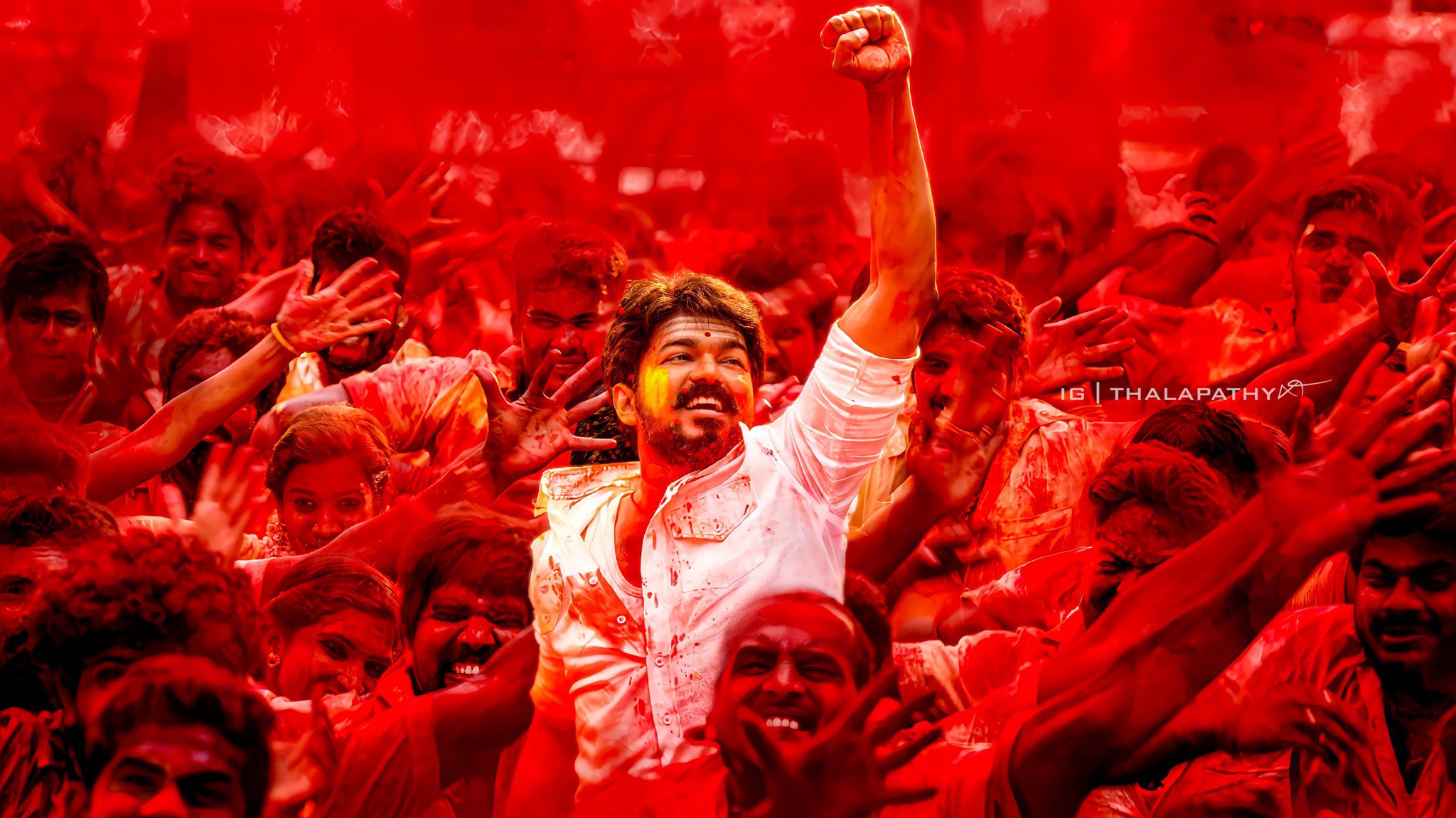
What makes Vijayism unique is its democratic ferocity. In an era where cinema has fragmented into multiplex niches and OTT silos, Vijay remains the last mass hero who can pull entire families—grandmothers, teenagers, auto-drivers, IT professionals—into single-screen theatres at 6 a.m. on opening day. His films are not just releases; they are festivals. Firecrackers light up the sky, milk is poured over fifty-foot cut-outs, and theatre floors shake with the rhythmic thud of a million feet. No data algorithm can quantify this devotion. It is visceral, almost spiritual.
Yet beneath the celebrations lies a deeper truth: Vijay redefined the grammar of the “mass” film. He took the angry-young-man template of the 1970s, infused it with 1990s romance, 2000s swagger, and 2010s social consciousness, and delivered it wrapped in irresistible commercial packaging. Films like *Ghilli* (2004), *Thuppakki* (2012), *Mersal* (2017), *Sarkar* (2018), and *Master* (2021) are not merely blockbusters; they are cultural documents that reflect the aspirations, anxieties, and anger of Tamil Nadu’s youth at precise historical moments. When he speaks of GST, NEET, or corporate corruption on screen, millions listen—because for them, Vijay is not just an actor; he is the voice they never had.
As he stands on the cusp of his 51st birthday and, quite possibly, the final lap of his cinematic journey before a larger political stage beckons, the magnitude of his legacy becomes clearer. He turned fandom into family, celebration into communion, and cinema into something that feels eternal. In an industry that often measures success in crores and trends, Vijay measured it in the tears of a child watching *Thuppakki* for the tenth time, in the roar that greets his entry even in re-releases decades later, in the unspoken bond that makes strangers embrace outside a theatre at dawn.
Thirty-three years. Seventy-one films. One man who made an entire state believe that heroes are not born—they are built, frame by frame, song by song, punch dialogue by punch dialogue.
Happy 33 years of Vijayism, Thalapathy. The screens belong to you. The hearts even more so.
❤️ #33YearsOfVijayism
— Samaran
Founding Editor, TheIndianCinema.com
December 4, 2025